
For the first time, the rupee declined to the low level of 80 against the US dollar in intra-day spot trading on Monday before ending the session 16 paise lower at 79.98 amid a surge in crude oil prices and unrelenting foreign fund outflows. At the interbank forex market, the local unit opened at 79.76 against the greenback but lost ground to touch the psychological low mark of 80 against the American currency. The local unit clawed back some lost ground and closed at 79.98, registering a fall of 16 paise over its previous close.

Investors' wealth eroded by over Rs 4.90 lakh crore on Friday amid a sharp fall in equities. The 30-share BSE Sensex tanked 1,020.80 points or 1.73 per cent to settle at 58,098.92. During the day, it tumbled 1,137.77 points or 1.92 per cent to 57,981.95. The market capitalisation of the BSE-listed firms plummeted by Rs 4,90,162.55 crore to Rs 2,76,64,566.79 crore on Friday.

Lower crude oil prices and a rally in domestic equities restricted the losses to some extent, forex dealers said. At the interbank foreign exchange market, the domestic currency opened weak at 79.50 per dollar.

Unwilling to jeopardise its cordial relationship with the all-powerful BCCI, the England and Wales Cricket Board (ECB) has rejected a lucrative 10-year buy-out offer of their franchise-based property 'The Hundred' from former IPL commissioner Lalit Modi, the Daily Telegraph reported.

Tasting success with the relaunch of Sensex derivatives in the onshore market, BSE is preparing for the 'offshore' debut of its 30-share index, which has become synonymous with the domestic markets. Sources in the know said that the India International Exchange (India INX), a subsidiary of BSE, received approval in July from the International Financial Services Centres Authority (IFSCA) to launch Sensex 30 derivatives contracts.

The rupee depreciated further by 13 paise to hit a new life-time closing low of 82.30 against the US dollar on Friday as a firm American currency and risk-averse sentiment among investors weighed on the local unit. Moreover, a negative trend in domestic equities and elevated crude oil prices sapped investor appetite, forex traders said. At the interbank foreign exchange market, the local currency opened at 82.19, then fell further to 82.43. It finally settled at an all-time low of 82.30 against the American currency, registering a decline of 13 paise over its previous close.

Tech giant Apple on Tuesday unveiled its much-awaited iPhone 15 and iPhone 15 Plus with USB-C type charging at its "Wonderlust" event.

Falling for the third day, Indian rupee on Wednesday weakened by 14 paise to close at over one-week low of 62.02 against the Greenback.

The rupee rose by 12 paise to close at 79.78 against the US dollar on Monday due to a weak dollar in overseas markets and an improved appetite for riskier assets. Stronger regional currencies also supported the rupee sentiment ahead of the US Fed policy decision on Wednesday. Weak domestic equities and FII outflows, however, capped sharp gains. At the inter-bank forex market, the local unit opened at 79.86 against the greenback and moved in a range of 79.70 to 79.87 in the day trade.
.jpg)
The central bank was seen selling dollars consistently when the rupee would approach the record low of 68.86 hit on August 28.

The rupee on Friday bounced back 32 paise to close at 64.74 against the American currency on fresh selling of dollar.

Sliding for the fifth straight session, the rupee fell 3 paise to close at a fresh lifetime low of 79.06 against the US dollar on Thursday amid a strong greenback overseas and unrelenting foreign fund outflows. At the interbank forex market, the local unit opened at 78.92 against the greenback and witnessed an intra-day high of 78.90 and a low of 79.07. It finally settled at 79.06, down 3 paise over its previous close of 79.03.

The rupee has lost 23 paise or 0.35 per cent in two days.

In the absence of major domestic events, equity markets will be driven by global trends, foreign fund flows and movement in the Brent crude oil, analysts said. The major global events this week are the European Central Bank interest rate decision and China's inflation rate, they added. "Indian equity markets are outperforming most of their global peers and trying to show resilience despite weak global cues.

The rally in PSBs, analysts feel, was more a knee-jerk reaction to the development, and the actual benefits will start to accrue once the addition takes place in 2024. "The actual benefit for banks from the inclusion in JP Morgan's EM Index will accrue from June 2024 onwards. "Until then, the larger fundamentals of the market will dictate the moves. "Once the initial euphoria subsides, bond markets will look to global cues which may trigger fresh selling," said Siddharth Khemka, head of retail research, Motilal Oswal Financial Services.

'If tech giants like Amazon, Google, Apple and Meta enter the IPL broadcasting arena, it could further revolutionize sports media in India.'

The rupee closes 12 paise down against the dollar.

Fresh dollar selling by exporters after USD was trading weak by 0.24 per cent against its major global rivals also aided the rupee recovery.

Dealers attributed the rupee's fall to increased demand for the US currency from importers.

In efforts to move towards a cashless society, the Reserve Bank on Wednesday said it will come out with a concept paper on promoting electronic payments, especially in smaller towns, by November-end.

The trading range is expected to be within 63.00 to 63.80.

The rupee had ended 11 paise higher at 62.20 on Tuesday.

The Indian rupee on Wednesday ended unchanged against the US dollar at 61.41 ahead of the outcome of US Federal Reserve's policy meeting.

Rupee fell to its 9-month low of 62.03 against the dollar.

The rupee shed 6 paise to hit a fresh 1-month low of 62.31 on Thursday.
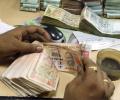
A weak dollar in overseas markets also strengthened the rupee sentiment

A strong dollar overseas and some hesitancy in local stocks, however, limited the rupee rise.

JP Morgan has downgraded the Indian information technology sector to 'underweight' as it believes the heydays of the sector are over. Rising margin headwinds in the near-term and the revenue headwinds in the medium-term from a potential macro slowdown, Ankur Rudra and Bhavik Mehta of JP Morgan said in the report, will mean that the sector's earnings upgrade cycle is behind. "We see peak revenue growth behind us and earnings before interest and taxes (EBIT) margins trending down from inflation, mean revision.

Alternative Investment Funds (AIFs) with a lock-in period performed better than the ones that allow investors to withdraw capital at any time. Close-ended schemes had a median return of 5.62 per cent in December, according to data from industry tracker PMSBazaar. The median returns for open-ended schemes were 3.91 per cent

The dollar was weak against major world currencies.

Rupee hits more than two-year low; RBI intervenes
The rupee extended its fall for the fourth consecutive day by losing another 6 paise to hit a fresh one-month low of 62.31.

The dollar's preliminary moves after the low 80.90 are supportive of a like dollar rally back to 85.50. We should see confirmation of that in the early part of next week, says Sonali Ranade

The rupee had gained nine paise to close at nearly one- month high of 61.84 against the dollar in yesterday's trade after the government said in the interim Budget that fiscal deficit this financial year will be capped below target.

In recent sessions, shares have rallied on hopes Hindu nationalist opposition leader Narendra Modi, a more business-friendly candidate, is seen coming to power on promises of economic revival and jobs.

The rupee had plummeted to over three-month low of 63.32.

Weakness of the dollar in the overseas market also boosted the rupee, a forex dealer said.
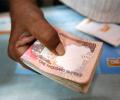
Rupee gained on increased selling of the US currency by banks and exporters

The rupee recovered from initial losses against the American currency and was quoted higher by 6 paise to 62.00 on fresh selling of dollars by banks and exporters in view of strong foreign capital inflows into equity market.
If there was one event that made the month of August stand out, it was a strengthening of the dollar index to levels last seen only 20 years ago, as the Federal Reserve dispelled all doubts about its intention to continue raising interest rates. Predictably, most currencies suffered against the US unit, with the bulk of the losers belonging to the emerging markets pack. Amid the volatility, the rupee, however, has displayed significant resilience and fared much better than most of its peer currencies.
